
When I was small, my grandma read to me before bed.
Every night, I’d listen and listen and listen and … “Wait!” I’d say. “What's that word mean?”
“This word?” said my grandma, pointing to it.
It was a Russian word because we were reading a Russian book. I was born in Ukraine when it was still part of the USSR. When I was a year old, my family came to Chicago.
My parents went to work and I stayed home with my grandma, my babulya.
![How to read 52 books a year, just like that [art] SQUARE.jpg](https://images.squarespace-cdn.com/content/v1/5615edeae4b0b9df5c3d6e90/1518481562986-AXHXM2U0QFWZLT7EBUWU/How+to+read+52+books+a+year%2C+just+like+that+%5Bart%5D+SQUARE.jpg)
Her name was Sofia.
“Yeh,” I said. “What's it mean?”
She always knew the definition.
“Are there any words you don't know, Babulya?” small-me asked.
“Maybe,” she smiled. “I don't know, baby.”
Years later, in college, I took RUSSIAN-400 for the easy credit. When I came home, I quizzed my grandma from the textbook, asking her to define the biggest words I could find.
Still, she always knew the definition.
“How did you build your vocabulary, Babulya?” big-me asked.
“I just read a lot,” she said.
The best way to develop your vocabulary is by reading.
The best way to process and internalize information is by reading it.
The best way to become a more versatile writer — capable of adapting your voice and style to meet the worldview of any audience — is by reading other writers.
And if you don't read, then … well … you have no advantage over an illiterate person.
By 9 o’clock I was in bed, listening to my grandma’s voice.
Around 9:45, she’d stop and look up at me. “I think that's enough for tonight,” she said. “Did you like it?”
“Uh-huuuh.”
“Me, too,” she said. “It’s a good one.” Then she kissed me and turned off the lights and closed the door. For years, we finished a book a week this way — 45 minutes at a time — and so can you.
How to read 52 books a year
It’s easier than you think.
It boils down to a simple three-step process:
Step One: Know your reading speed.
This will inform how long you'll need to read each day.
Here’s how to test your speed: pick up a book, set your phone timer for 60 seconds, and start reading. When the timer goes off, stop and count the number of lines you read to get your lines/minute. Now multiply that number by 10 (because the average book holds 10 words/line) to get your words/minute. Easy.
Most people fall somewhere between 200 - 250 words/minute and, according to Amazon, the median number of words per book is about 64,000.
That means it’ll take most people about 320 minutes to finish a median-length book cover-to-cover. Divided by 7, that’s about 45 minutes of reading per day. That's a TV show.
In other words, most people can read 52 books a year in minutes — not hours — a day.
Step Two: Schedule your reading time.
This’ll hold you accountable.
Scheduling anything (e.g., a date; a hair appointment; a personal training session) makes it real. It lends gravity and urgency to the event.
That said, if you’re a morning person, read in the morning. If your brain works best after dinner, read after dinner.
Scheduling around your peak hours will make forming the habit easier, less stressful.
Step Three: Keep an active reading list.
This’ll galvanize your routine.
It’ll keep you motivated, eager to continue reading week after week.
“‘The End.’ We finished another one!” said my grandma.
“What’s next?” I demanded. “What's neeext?”
“Let’s check our list,” she said, turning over the bookmark. “Want to read Timur and His Squad?”
“Maybe. What’s it about?”
“It’s an old story,” she said. “I remember when my babulya read it to me.”
“Really?”
“Yes,” she smiled. “Want to try it?”
“Yes.”
“Then we will,” she said. “Goodnight, baby. I love you.”
LEARN TO PERSUADE
![VeryGoodCopy [Logo] DARK.png](https://images.squarespace-cdn.com/content/v1/5615edeae4b0b9df5c3d6e90/1521944037341-S5CUGJQGASBVCF3AO8WO/VeryGoodCopy+%5BLogo%5D+DARK.png)
WRITE BETTER.
MARKET BETTER.
SELL MORE.
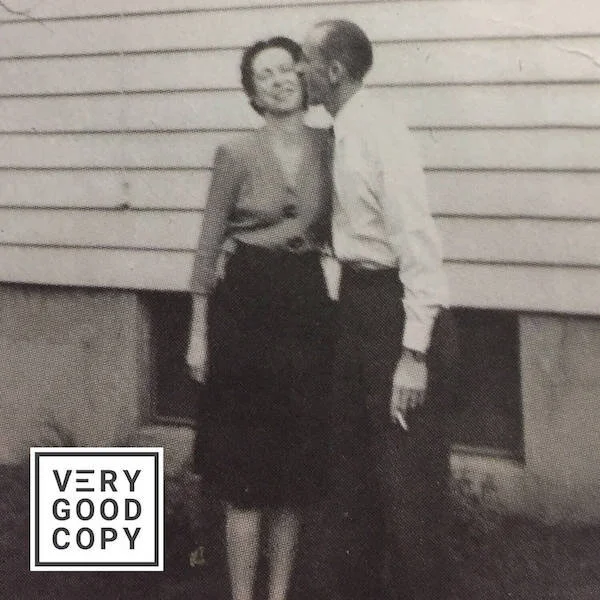
Because copywriters conjure emotion for a living.

The buildings in Jaipur, India are built of vibrant red brick. The entire place glows like Mars.
Writers share their work.
Perfectionists hoard it.

"I'm sorry about all this," I said.
"Thanks," he said. "But I deserve it. Things could've been different."

Here's a learning tactic.
It's what I do when I want to internalize a book — or an article, for that matter. You can do it, too.

When Big Lurch woke up, he was alone in a prison cell, confused and covered in blood.

As a content marketer, your most valuable asset is not your content.

Pressure and time. Pressure and time. Pressure and time.

Words are commodities. Anybody can fill space on a page.

Simplicity can be impactful.

Thank you, grandma.


Every time you're blocked ...

What's the purpose of your first line of copy?

They never have ...

Ideas, like love, can escape you. Don't let them.

Passion drives success.
Kevin Kelly, Co-founder and Editor of Wired magazine, on God and meaning of life.
Three billion people have access to the Internet, but only a third of those people speak English.

Just because you can, doesn't mean you should.


And it isn't even about copywriting ...

There are two types of bullet points: Those that break up text, making information easier to digest. And those that sell.

Swearing can be a powerful gesture. It could also be meaningless ...

Three simple rules that'll make your copy bolder, clearer, and more persuasive.

You should know, I'm not sexy. Sorry.

The one question that will help you write devastatingly creative and effective ads.

Whatever it is, nobody is going to buy it without ...

Creativity is like a muscle: It grows and develops with exercise, practice.

You’ll know you’re good.
You’ll know you’re good because a few clues will give it away…
Microcopy is concise, clear, small-print text that helps or encourages readers to complete an “action” on your website or app.
It’s how the great copywriter, Gene Schwartz, thought about the discipline…
If you aspire to write good copy, watch and read these things religiously.
Make it ugly.
Let me explain…

The longer you focus, the more focused you will become.
Focus long enough and you’ll tap into something called Deep Work…
There’s a marketing tenant every good copywriter respects…
Knowing that, here are the words and phrases every copywriter should use…
![How copywriters put prospects in the buying mood [quick trick]](https://images.squarespace-cdn.com/content/v1/5615edeae4b0b9df5c3d6e90/1533095575515-C2JPAZA3C46IBX00EMM8/Put+prospects+in+the+buying+mood+%5BVGC+art%5D.JPG)
As a teenager, I sold magazine subscriptions door-to-door. At first it was hard and I was unsuccessful.
Then I picked up a trick that skyrocketed my conversion rate…

This strategy is scientifically proven to help writers — and anyone else — spur their creativity.

“I can do that,” said The Copywriter. “But first let me ask you a question.”

“And how many of us have persistence enough in following out our ideas of what is obvious?”
If your goal is to write tighter copy — copy that says more in fewer words — try this 15-minute exercise.

Sometimes that feeling — that mood — is already there, all around, omnipotent and omnipresent.

Joyce was a magisterial novelist, but he would’ve made a miserable copywriter.
Smart writing is clear and concise. It’s easy for the eyes and mind to follow. It’s accessible and unpretentious, easy to consume and hard to create.
Smart writing is readable. Effortlessly readable.
Be a copywriter, not a coward.
If you can back up your claim, write the copy. If you can’t, be a professional and do the right thing.
Don’t write headlines that are flat, invisible, like white paper on a white desk. Write compelling headlines that stand out. Headlines that contain emotion, image, logic, and promise.
Here’s how to do that.
A visceral response is a physical reaction to a non-physical experience, an emotion.
If you feel it, don’t dismiss it. Let it wash over you.
You’ll be a more empathetic person for it — and a better marketer, too.
“We’re talking about him having an accident,” said the man, whispering. “Just walk up to him, put your hand on his back, and give him one big push!”

Don't sell chips. Sell a worldview.

It boils down to a simple three-step process ...

“I was The Onion’s editor at the time so, mainly, I was just punching up or rewriting other people’s work,” said Scott. “And so when I sat down to write the pilot, I was like, ‘Shit! I have writer’s block! I got nothing!’”
CHICAGO—Saying he was ‘more than happy’ to jump on the call, Scott Dikkers, The Onion’s longest-serving editor-in-chief, graciously gave time out of his day to talk to a copywriter about how to overcome writer’s block.
As a copywriter, it’s tempting to get lost in the majesty of your creativity, your ideas.

Looking inward for ideas will burn you out.
Want more ideas than you could ever use?
Confident copy says, “Go ahead, you’re making the right decision.”
Great copy starts with efficient questions.
“You have to be more concise,” he said. “You write like a water hose. You need to be a nail gun."