
![VERY GOOD COPY [LOGO].png](https://images.squarespace-cdn.com/content/v1/5615edeae4b0b9df5c3d6e90/1503782358451-S6IBQC78T0SPO2RRPUCZ/VERY+GOOD+COPY+%5BLOGO%5D.png)
What do real-estate agents and the Ku Klux Klan have in common?
Why are drug dealers so fond of living with their mothers?
What makes the perfect parent?
I don't know the answers to these questions, but Steven D. Levitt and Stephen J. Dubner do.

Levitt teaches economics at the University of Chicago. Dubner is a journalist who writes for the New Yorker and The New York Times.
In 2003, The Times sent Dubner to Chicago to profile Levitt, a visit that forged a friendship and a partnership. A couple years later, the two published a book: Freakonomics.
Claiming to examine "the hidden side of everything," Freakonomics juxtaposes unrelated topics, like real-estate agents and the Ku Klux Klan. In doing so, Levitt and Dubner pit economics against the human condition in a fascinating, completely original way.
Their book is creative and compelling, deep and yet, somehow, simple.
It sold seven million copies.
Steven and Stephen went on to publish two more books. And in 2010, they started a hit podcast, Freakonomics Radio, which asks fun questions, like:
- What's More Dangerous: Marijuana or Alcohol?
- Should the U.S. Merge With Mexico?
- How Can One Save $1 Billion Without Even Trying?
Their podcast's tone is fun and light, much like their books.
It makes for easy listening and serious thinking. It's addicting.
The Acid Trip
The acid trip in question belongs to Kevin Kelly, Co-founder and Editor of Wired magazine. It was touched on in a Freakononomics Radio episode called Someone Else's Acid Trip. Dubner, who hosts the podcast, interviews Kelly.
Dubner focuses on Kelly's life: His travels, family, and entrepreneurship. The trip was touched on briefly. Dubner asked if Kelly had ever dropped acid.
That's when the heralded editor said something I didn't understand:
"There's nothing more boring than hearing about someone else's acid trip!"
They both laughed, nervously. Then Kelly said he dropped acid for the first and only time on his 50th birthday. He said he had a professional guide. He said he saw God. And then they moved on to other, "more interesting" topics.
I thought, Are you kidding me?
I was baffled: How could such a smart, worldly person consider his own acid story boring?
I mean, I've never done acid. According to Stephen Dubner, neither has he. So why is Kelly assuming that the audience wouldn't be at least curious about his experience? Is he being squeamish? Was it a bad trip?
Then it hit me:
There's no "You" in an acid story.
Acid stories are a bore.
There's no "We," either. There's just "I" and "My" and "Me." As far as I'm concerned, it doesn't matter who you are or what you know, if those are the only pronouns coming out of your mouth, people are eventually going to stop listening.
It made sense. Kelly is right: Acid stories are a bore.
So, in true Freakonomics fashion, I decided to juxtapose a couple concepts.
The Copy Lesson:
It's simple, really: Don't be an acid-trip copywriter.
Don't ever expect that a prospect is reading:
- Your landing page
- Your email newsletter
- Your website
Your anything because they want to learn more about you. They don't.
Prospects don't care about you. They only care about how you can help them, about the value you can provide.
And delivering that value starts with pronouns like "You" and "Your" and "We" and "Us."
These are the words that make people perk up.
These are the words that drive action.
LEARN TO PERSUADE
![VeryGoodCopy [Logo] DARK.png](https://images.squarespace-cdn.com/content/v1/5615edeae4b0b9df5c3d6e90/1527210203132-9PU1D4RVHSPVPGAIEBPZ/VeryGoodCopy+%5BLogo%5D+DARK.png)
WRITE BETTER.
MARKET BETTER.
SELL MORE.

Because copywriters conjure emotion for a living.
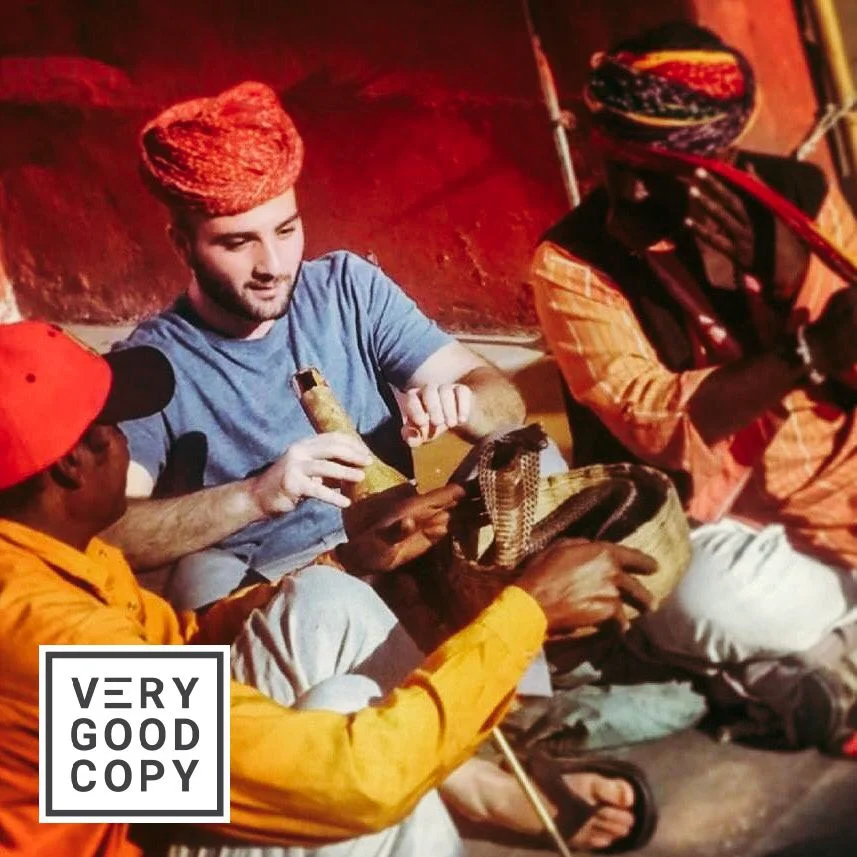
The buildings in Jaipur, India are built of vibrant red brick. The entire place glows like Mars.

Writers share their work.
Perfectionists hoard it.

"I'm sorry about all this," I said.
"Thanks," he said. "But I deserve it. Things could've been different."

Here's a learning tactic.
It's what I do when I want to internalize a book — or an article, for that matter. You can do it, too.

When Big Lurch woke up, he was alone in a prison cell, confused and covered in blood.

As a content marketer, your most valuable asset is not your content.

Pressure and time. Pressure and time. Pressure and time.

Words are commodities. Anybody can fill space on a page.

Simplicity can be impactful.

Thank you, grandma.


Every time you're blocked ...

What's the purpose of your first line of copy?

They never have ...

Ideas, like love, can escape you. Don't let them.

Passion drives success.

Kevin Kelly, Co-founder and Editor of Wired magazine, on God and meaning of life.

Three billion people have access to the Internet, but only a third of those people speak English.

Just because you can, doesn't mean you should.


And it isn't even about copywriting ...

There are two types of bullet points: Those that break up text, making information easier to digest. And those that sell.

Swearing can be a powerful gesture. It could also be meaningless ...

Three simple rules that'll make your copy bolder, clearer, and more persuasive.

You should know, I'm not sexy. Sorry.

The one question that will help you write devastatingly creative and effective ads.

Whatever it is, nobody is going to buy it without ...

Creativity is like a muscle: It grows and develops with exercise, practice.

You’ll know you’re good.
You’ll know you’re good because a few clues will give it away…

Microcopy is concise, clear, small-print text that helps or encourages readers to complete an “action” on your website or app.
It’s how the great copywriter, Gene Schwartz, thought about the discipline…

If you aspire to write good copy, watch and read these things religiously.

Make it ugly.
Let me explain…

The longer you focus, the more focused you will become.
Focus long enough and you’ll tap into something called Deep Work…

There’s a marketing tenant every good copywriter respects…

Knowing that, here are the words and phrases every copywriter should use…
![How copywriters put prospects in the buying mood [quick trick]](https://images.squarespace-cdn.com/content/v1/5615edeae4b0b9df5c3d6e90/1533095575515-C2JPAZA3C46IBX00EMM8/Put+prospects+in+the+buying+mood+%5BVGC+art%5D.JPG)
As a teenager, I sold magazine subscriptions door-to-door. At first it was hard and I was unsuccessful.
Then I picked up a trick that skyrocketed my conversion rate…

This strategy is scientifically proven to help writers — and anyone else — spur their creativity.

“I can do that,” said The Copywriter. “But first let me ask you a question.”

“And how many of us have persistence enough in following out our ideas of what is obvious?”

If your goal is to write tighter copy — copy that says more in fewer words — try this 15-minute exercise.

Sometimes that feeling — that mood — is already there, all around, omnipotent and omnipresent.

Joyce was a magisterial novelist, but he would’ve made a miserable copywriter.
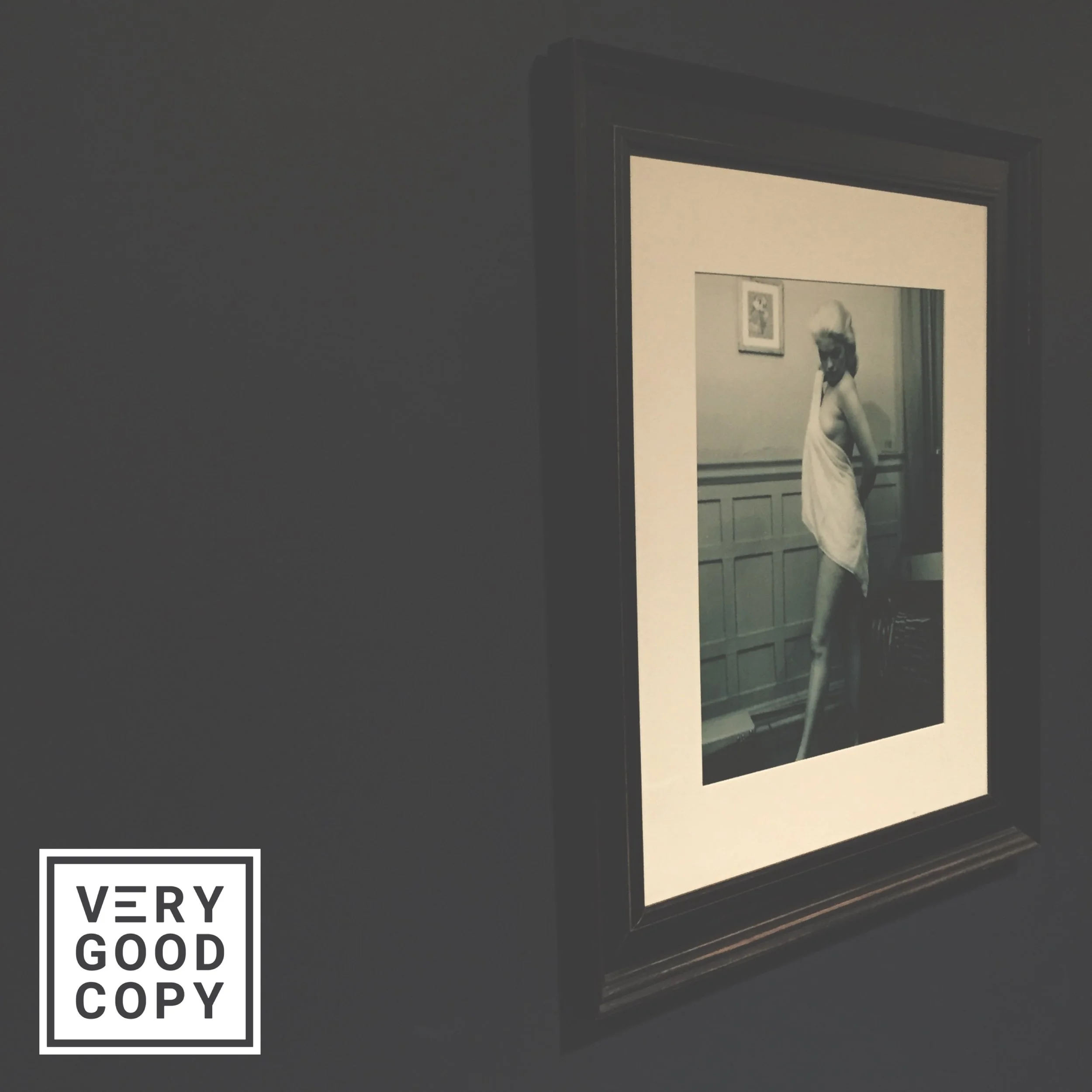
Smart writing is clear and concise. It’s easy for the eyes and mind to follow. It’s accessible and unpretentious, easy to consume and hard to create.
Smart writing is readable. Effortlessly readable.

Be a copywriter, not a coward.
If you can back up your claim, write the copy. If you can’t, be a professional and do the right thing.

Don’t write headlines that are flat, invisible, like white paper on a white desk. Write compelling headlines that stand out. Headlines that contain emotion, image, logic, and promise.
Here’s how to do that.
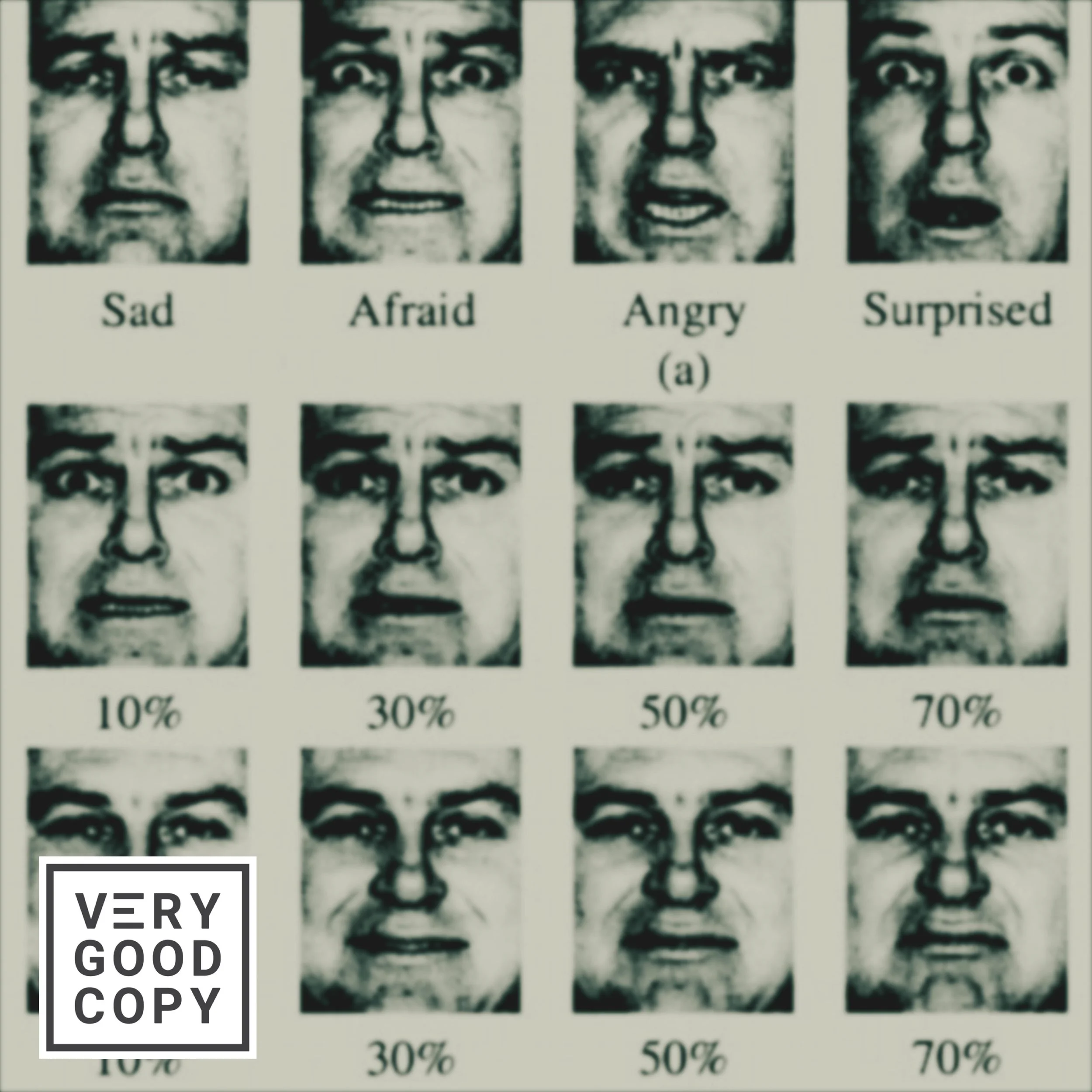
A visceral response is a physical reaction to a non-physical experience, an emotion.

If you feel it, don’t dismiss it. Let it wash over you.
You’ll be a more empathetic person for it — and a better marketer, too.

“We’re talking about him having an accident,” said the man, whispering. “Just walk up to him, put your hand on his back, and give him one big push!”

Don't sell chips. Sell a worldview.

It boils down to a simple three-step process ...

“I was The Onion’s editor at the time so, mainly, I was just punching up or rewriting other people’s work,” said Scott. “And so when I sat down to write the pilot, I was like, ‘Shit! I have writer’s block! I got nothing!’”

CHICAGO—Saying he was ‘more than happy’ to jump on the call, Scott Dikkers, The Onion’s longest-serving editor-in-chief, graciously gave time out of his day to talk to a copywriter about how to overcome writer’s block.
As a copywriter, it’s tempting to get lost in the majesty of your creativity, your ideas.

Looking inward for ideas will burn you out.

Want more ideas than you could ever use?

Confident copy says, “Go ahead, you’re making the right decision.”

Great copy starts with efficient questions.
“You have to be more concise,” he said. “You write like a water hose. You need to be a nail gun."